
A FATHER'S DAY REFLECTION
Task 57, June 19 to June 26

“A father is a son’s first hero.”
As a father four times over I understand the inherent complexities that come with the title, and as a son I know the bonds a boy shares with his dad. Paul, my podcast co-conspirator, has written the following article about his relationship with his father. Jeff
My father passed away 33 years ago, when I was just 33 years old—half the age I am today. Far too young to lose a father, and far too short for a man who deserved more.
My relationship with my dad was anything but conventional. It certainly wasn’t the kind of father-son relationship that fits neatly into a Father’s Day card.
From my earliest memories, my father treated me as an adult—an equal. I remember dinners that he and my step-mother Marian hosted in Walton-on-Thames, just outside London, for Boeing executives arriving in Rolls-Royces after closing multi-million-dollar 747 deals. There I was, a teenager sitting amongst the adults, discussing business while sipping a gin and tonic.
I don’t remember my father ever giving me much advice about life. Yet I was always eager to ask him about money, investments, or what the future might hold. Perhaps he believed some lessons had to be learned firsthand. One thing he did teach me, however, was how to drive a stick shift in an Austin Mini Cooper—albeit on the wrong side of the road.
CHECK OUT OUR PODCAST, OLD PEOPLE THIS WEEK, ON YOUTUBE, SPOTIFY AND APPLE PODCASTS.
I idolized my father. I wanted his life of international travel, but I also wanted to work in television. Truth be told, I wanted to be Jim McKay on ABC’s Wide World of Sports. One of my most vivid, enduring memories is seeing a stack of his canceled passports accumulated through dual citizenship and his 33-year career with Boeing. To me, those passports represented a life of adventure and a world far bigger than my own.
I remember the day my mother told me my father wanted a divorce as clearly as if it happened moments ago. We were living in an apartment. I sat on the bathroom floor with the door closed, stretching the phone cord as far as it would reach. My father spoke to me in the same measured, adult manner he always had—as if we were discussing a business matter at Boeing. He explained that my parents would be living apart and that life would be different from that day forward. He reassured me that I would remain in my school with my friends and that my mother would be supported, though she would need to continue working.
After he divorced my mom my dad and I were separated by an ocean and a continent, and I only saw him a couple of times a year, and then only for a week or two—but I still thought the world of him, much to my mother’s dismay. He and I communicated mainly through handwritten letters. News, thoughts, and life events traveled by “snail mail,” often arriving weeks after they happened. International phone calls were prohibitively expensive—practically reserved for Christmas and birthdays.
To this day, I still have every letter we exchanged. They sit preserved in a metal file box, hundreds of them spanning my teenage years. Together they tell the story of a father and son navigating life from opposite sides of the world. Most of them are filled with common adages reminding me to study harder, to warn me about impending academic doom if I didn’t apply myself, and encouragement to stay focused. The ultimate incentive was the promise he made to me: if I graduated from high school the keys to a brand-new 1978 Chevrolet Monte Carlo would fall into my eager hands.
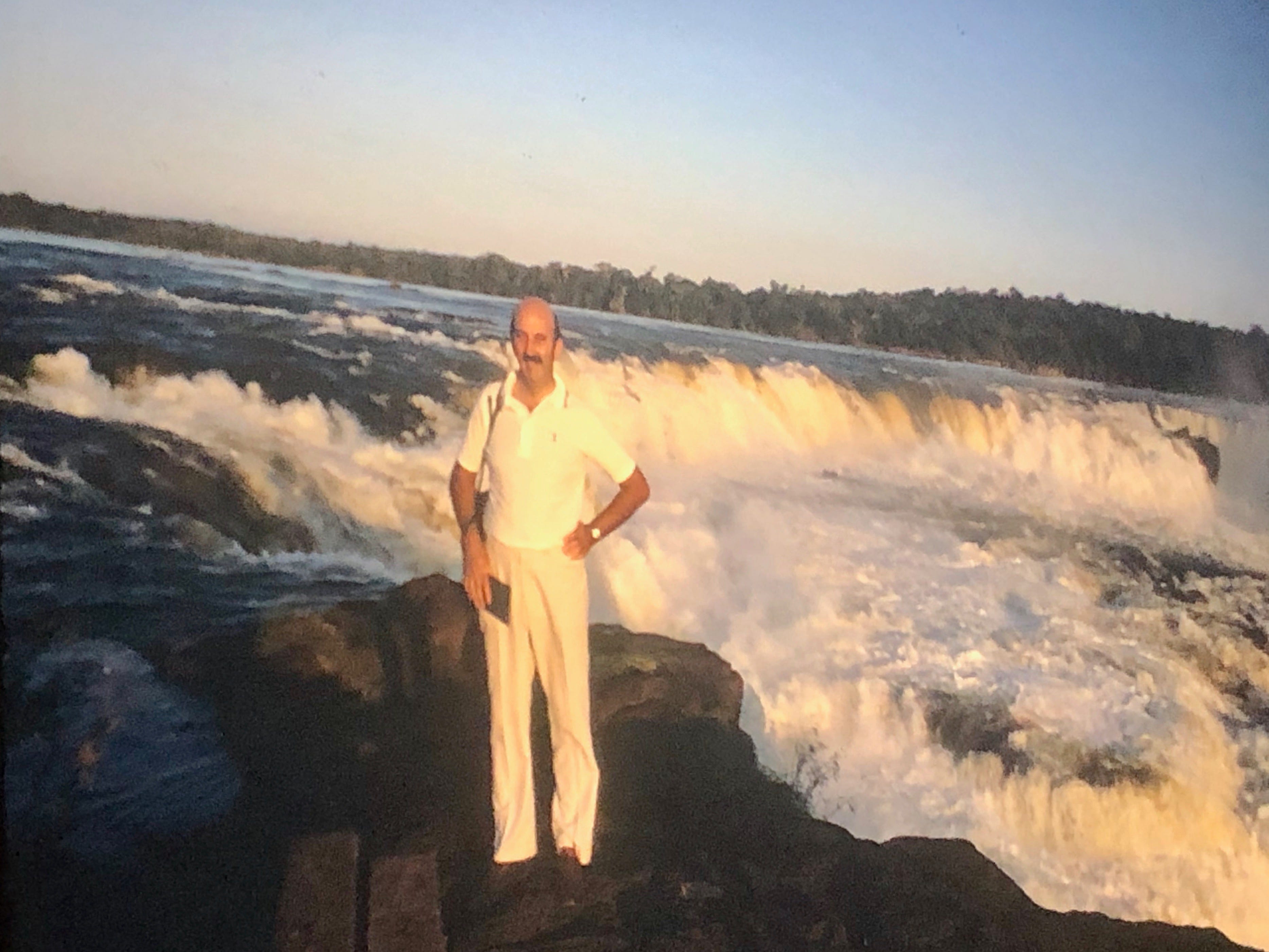
There is no Father’s Day card that could ever truly capture how I felt about my dad. But if I had to summarize it, I would return to the final words I spoke to him during that conversation about the impending divorce. I was 11.
“I understand and accept your decision. I want you to know that I will be fine, and I truly hope you find the joy and happiness in your life that is still to come.”
Looking back now, I realize those were not the words of a child.
They were the words of a son who loved his father.